The US attack on Iran on February 28, 2026, under the title "Ramadan War" was a brutal and devastating assault on the sovereignty and territorial integrity of the Islamic Republic of Iran. This attack was in response to the hostile and terrorist actions of the Zionist regime against Iran and to defend Iran's sovereignty and national security. In this attack, the armed forces of the US and the Zionist regime jointly invaded Iranian soil, and in this attack, Grand Ayatollah Seyyed Ali Hossein Khamenei, the former leader of the Islamic Republic of Iran, was martyred. The attack was not limited to the assassination of the former leader, but also included a series of heinous crimes, including missile attacks on Minab girls' elementary school, tourist attractions, hospitals, and civilian areas. These attacks resulted in the martyrdom and injury of a large number of Iranian citizens, including women and children. In this text, we analyze the relations between the US and European countries and the crimes of the US and Israel. The analysis highlights the role of Europe in reducing tensions and promoting peace in the region. However, it also notes that Europe's approach has been influenced by a number of factors, including unilateral US policies, Washington's sanctions against Iran, and Europe's own mistakes. The US has imposed severe sanctions on Iran, which have had a significant impact on the Iranian economy and people. Europe has largely followed the US lead on these sanctions, which has limited its ability to engage with Iran and promote economic cooperation. The positions and goals of key European powers such as London, Paris, and Berlin towards Tehran and the West Asia region are also discussed. The analysis notes that these countries have different approaches to Iran, but they all share a common goal of promoting stability and security in the region. The analysis emphasizes the need for Europe to adopt a balanced, fair, and independent approach towards Iran. This approach should be based on a deep understanding of the complexities of the region and the needs and interests of all parties involved. According to Bahram Ghasemi, former spokesperson of the Iranian Ministry of Foreign Affairs and former ambassador to Paris, Europe discussed the issues involved. Ultimately, this approach will help to build trust and confidence between Iran and Europe and promote a more peaceful and prosperous future for all parties involved.
2026/05/11
Why did the U.S. attack Iran? At a time when its intelligence agencies announced that Iran had not yet made a decision to develop a nuclear bomb, why did the United States enter the war?
Iran Daily Newspaper (Keihan) After Israeli fighter jets failed in the first ten days of the war to completely destroy Iran's nuclear program, especially the Fordo nuclear reactor, the Zionist regime, which was afraid of the consequences of prolonging the war with Iran, the high financial costs of confronting Iranian missiles, weakening its economy during this conflict, and not quickly achieving its objectives, pressured President Trump to intervene in the war to destroy Iran’s nuclear program. The Zionist regime, which lacked the capability to destroy nuclear sites and carry out long-term bombing of Iran without U.S. support, and which generally avoids entering into protracted conflicts, is executing the "Greater Israel" project with U.S. assistance. This project aims to expand its territory, power, and influence, and to eliminate regional powers to prevent any response or defense against its malevolence; a plan beyond traditional religious concepts, called the so-called Greater Israel.
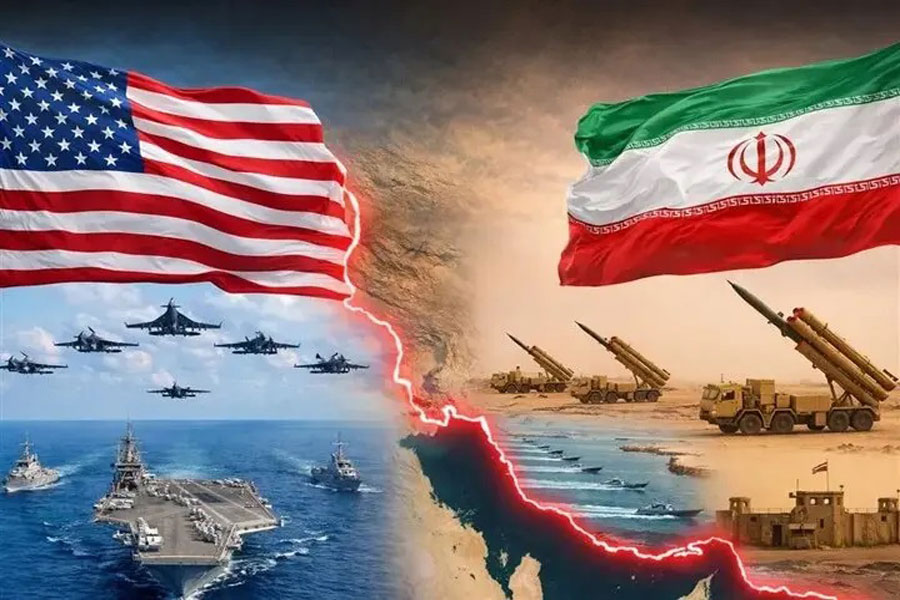
Since October 7, 2023, Israel has been committing genocide in the Gaza Strip and destroying all vital infrastructure. Between September and November 2024, it launched a large-scale war in Lebanon, carried out numerous targeted assassinations, and despite a ceasefire, continues to pursue its war aims through ongoing assassinations, killings, and destruction. Furthermore, it has repeatedly bombed Syrian military sites and equipment and occupied significant areas following the fall of Assad late last year. Additionally, it continues its attacks in Yemen. While Donald Trump stated on Wednesday, June 18, in response to a question about attacking Iran's nuclear facilities, "Maybe I will, maybe I won't; nobody knows what I will do," and three days later, White House Press Secretary Karoline Leavitt told reporters on Thursday, June 19, that President Trump would decide within the "next two weeks" whether to join Israel's war against Iran to destroy its nuclear program, and mentioned the possibility of serious negotiations with Iran, the United States joined Israel's war against Iran on the tenth day of the war, attacking three Iranian nuclear sites in Fordow, Natanz, and Isfahan at dawn on Sunday, June 21. Trump's statement was read by a spokesperson, even though the decision to bomb Iran's nuclear facilities had been made the previous day, Wednesday, June 18, and the announcement of this two-week period was another designed deception to surprise Iran.
Following this attack, Trump, claiming complete success in destroying Iran's nuclear facilities, stated in a bullying tone: "Iran must now make peace. If they do not, future attacks will be much larger and much easier... either peace will be established, or a catastrophe will occur for Iran, much larger than what we have witnessed in recent days." Trump's America's attack on Iran was reminiscent for many of Bush's America's attack on Iraq in 2003 to disarm it of weapons of mass destruction. In 2002, Netanyahu, the Prime Minister of the Zionist regime, had stated: "There is no doubt that Saddam Hussein is seeking to obtain nuclear weapons." George Bush had also claimed that "Saddam's regime is trying to build an atomic bomb" and called for a pre-emptive strike. That war was based on a lie, and no weapons of mass destruction were found.
In the attack on Iran, the reason given was the destruction of Iran's nuclear weapons. The accusation of building nuclear weapons, which was repeated by Netanyahu for years and supported by the West, eventually drew Trump into the war. This is an accusation for which no evidence was provided, and it will likely become clear in the coming years that this claim was false. Netanyahu praised Trump's "bold decision" to bomb Iran's nuclear sites, saying: "We have changed the face of the Middle East, and this is what we have witnessed today!
Trump's joining Israel's war against Iran was in complete conflict with Trump's electoral promises and a great betrayal to millions of American voters who had supported him to make America great again, not to engage in foreign adventures and ignite a new war.
Trump won the 2016 presidential election against former Secretary of State Hillary Clinton partly because he criticized American wars after the September 11 attacks, describing them as a "disaster," and his recent electoral campaign was successful due to his commitment to "prevent World War III" and his slogan "America First."
But was the US's goal in Sunday's attack truly to destroy Iran's nuclear weapons? Given that its intelligence agencies had stated Iran had not yet decided to build a nuclear bomb, why did the US go to war?
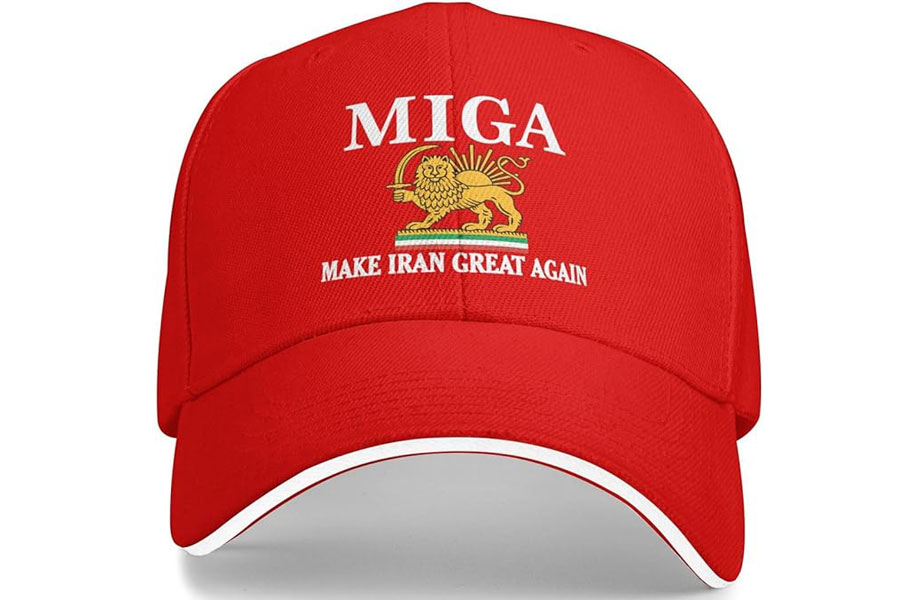
Hours after US Defense Secretary Pete Hegseth stated that the mission was solely against Iran's nuclear program and not against the country or its people, and that the Pentagon and White House had no plans for "regime change" in Tehran, US Vice President J.D. Vance, after his country's attack on Iran's nuclear facilities, emphasized that the United States sought a diplomatic process with Tehran and that Washington did not want war with Tehran or "regime change" in Iran. Despite these statements, Donald Trump alluded to a change of government in Iran in a post on the Truth Social network, writing: "Using the term 'regime change' is not politically correct; but if Iran's current regime cannot bring greatness back to Iran, why shouldn't there be a change in the regime??? MIGA!!!
"MIGA" is an acronym for Make Iran Great Again, echoing Trump's original campaign slogan "MAGA" (Make America Great Again), which he applied to Iran in this context. Just as the stated goal of George W. Bush's administration in attacking Iraq included regime change in addition to neutralizing weapons of mass destruction, Trump's post indicated that, in alignment with Netanyahu, the objective of entering a war in Iran was not limited to destroying Iran's nuclear programs, as stated by the US Secretary of Defense and Vice President.
While the US attack on Iran's peaceful nuclear facilities is a flagrant violation of the UN Charter, international law, the Nuclear Non-Proliferation Treaty (NPT), the Statute of the International Atomic Energy Agency, UN Security Council Resolutions 487 (1981) and 2231 (2015), and is contrary to the US Constitution and the will of American voters who supported Trump, the issue of "regime change," previously listed by Netanyahu among the war's objectives, demonstrates Netanyahu's influence over Trump and the existence of an alliance that, under the pretext of destroying Iran's nuclear weapons, seeks to consolidate US and Israeli hegemony over the region by changing the ruling system in Iran, which has been the sole regional power opposing the bullying of the US and the Zionist regime for decades.
America's entry into the war also revealed Israel's urgent need for direct US military support against Iranian targets and serious Israeli security weaknesses.
With the backing of America, there is now a widespread belief that Netanyahu will not stop at a war against Iran. If international institutions and regional and global powers do not take a clear stance in condemning Israel's crimes and stand up to its aggressions, the Zionist regime, under the guise of potential threats, security violations, self-defense, and pre-emptive attacks, and emboldened by its absolute impunity, will initiate wars wherever it wishes and shamelessly lie before the eyes of the world. These days, there are whispers in Israel that the semi-final will be with Iran and the final with Turkey.
Trump may have succeeded for now in attacking Iran and destroying parts of its nuclear reactors, but Iran still has many political cards and military capabilities to play. This is a situation that Israel cannot sustain alone for a long period as the war drags on. These actions could escalate into a wider and longer conflict than Trump envisioned, reminiscent of America's "endless and eternal wars" in Iraq and Afghanistan – wars that Trump had called "stupid" and promised never to enter, but which Israel/America entered in pursuit of victory.
Why the USA Attack on an Iranian Primary School? Is it not a war criminal?
Female teachers and Students killed in US attack on Minab School
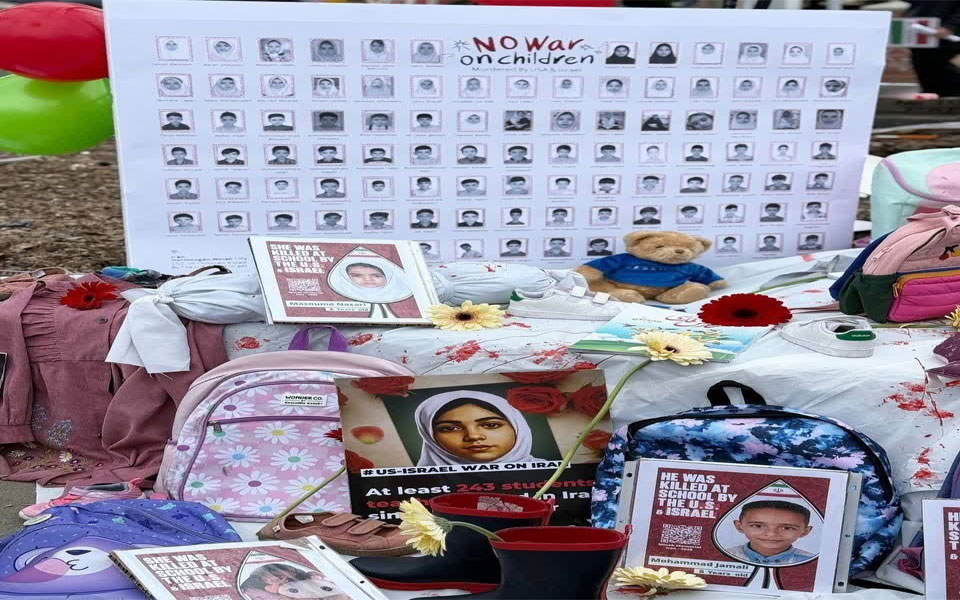
The American missile attack on the Shajareh Tayyebeh school in Minab, Hormozgan province, which occurred on February 28, 2026, at 11:30 AM, coincided with the start of the war between America, Israel, and Iran. The attack resulted in 156 martyrs and 95 wounded, with most of the victims being students (73 boys and 47 girls).
According to some reports, two American Tomahawk cruise missiles hit the school, while others reported three missile attacks. After the first hit, people present took refuge in parts of the building, including the prayer hall, but the subsequent hits also targeted the same location.
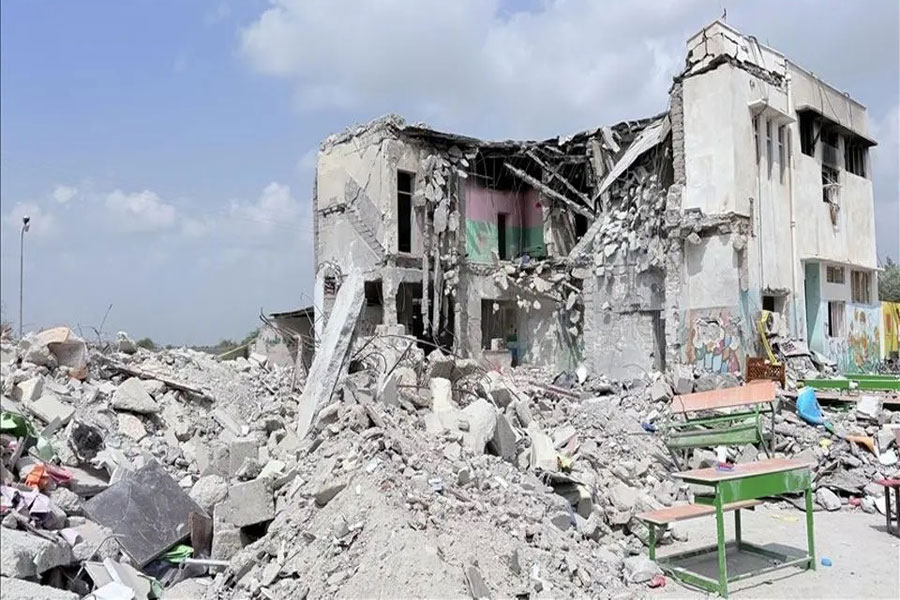
Iranian authorities held America and Israel responsible for the attack, but these countries have not accepted responsibility and have evaded accountability. Based on reports from news agencies such as the New York Times and Reuters, evidence and results of some investigations, including the type of weapons used, point to the role of American forces in this attack. Amnesty International has also held America responsible for the attack. Additionally, reports have been published about the intentional nature of this attack; for example, the investigative unit of Al Jazeera described the attack as intentional and stated that its goal was to create social shock and weaken public support for military forces.
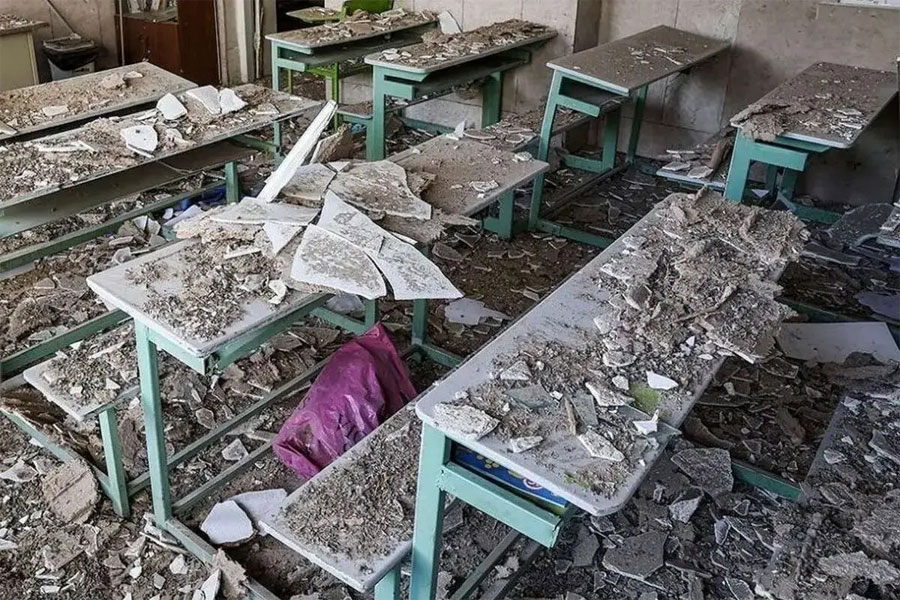
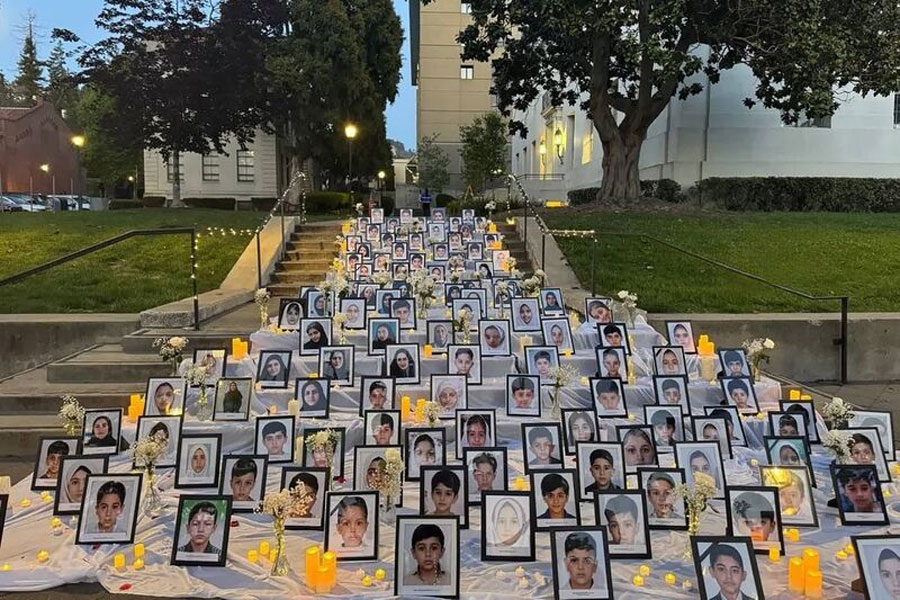
Given the civilian nature of the target, this event has been described by some institutions and authorities as a violation of international humanitarian law or a war crime. The attack was met with reactions and condemnations from Iranian authorities, UNESCO, the Secretary-General of the United Nations, and officials from countries such as China, Italy, and the Pope. Following this event, numerous artistic and cultural works were produced and published in memory of the victims, and ceremonies and memorials were held in some countries around the world.
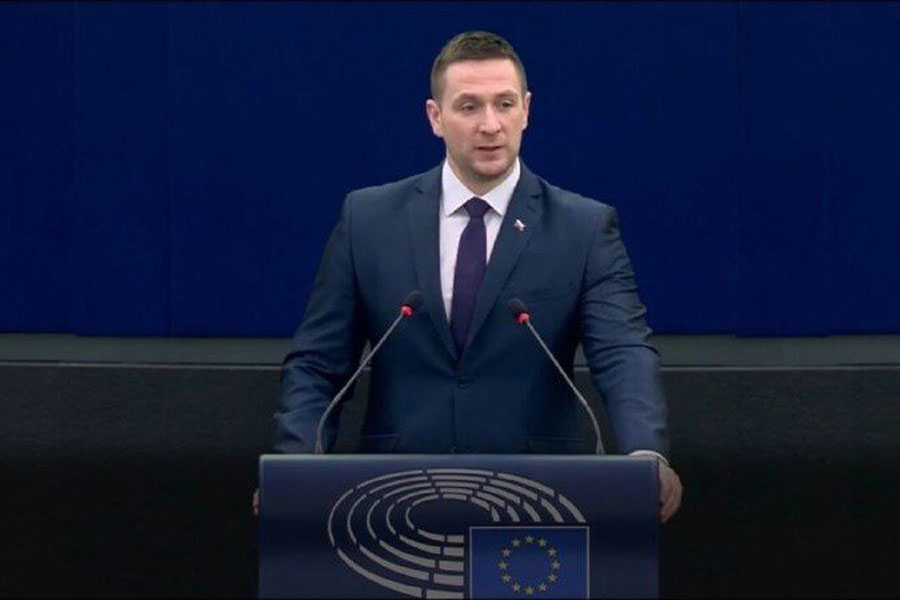
Milan Oherik, a member of the European Parliament, described the missile attack on the Shajareh Tayyebeh elementary school in Minab, Hormozgan province, during the recent war between America and the Israeli regime against Iran as intentional and a war crime, and called for an investigation into the incident. Oherik, a member of the European Parliament, said on Friday at the "Angels of Minab" ceremony held in front of the Iranian embassy in Brussels that, given what Israel has done in Gaza and what it has done to civilians, including children, women, and the elderly, in Lebanon and Beirut, this attack was likely planned and intentional. He added that they are expanding terrorism and trying to win the war through such actions. The Hungarian member of parliament described the Minab massacre as a war crime, called for an investigation, and said that European countries should not be accomplices to such crimes. He stated that he had sent a letter to the European Commission and added that "the problem of the European Commission and European leaders is their double standards and lack of investigation into such crimes due to their weakness."
He acknowledged that European leaders are unable to resist the aggressive policies of the United States and Israel. The intentional and bloody attack by the bloodthirsty and child-killing enemies on the Shajareh Tayyebeh elementary school in Minab is considered one of the most horrific human atrocities of our time. Many emphasize the need to preserve and document the remains of time as a historical document and memorial for future generations. In the early hours of the American and Israeli aggression against Iran on February 28, 168 students, along with some teachers, school staff, and parents, were martyred. In this human tragedy, three missile attacks targeted the Shajareh Tayyebeh school in Minab at intervals during the early hours of the aggression by the American and Zionist enemy, thus another unjustified and intentional war crime was recorded in the era of advanced and smart weapons used by the world's criminals.
America underestimated Iran and paid the price. Europe should not align with America's mistaken policies.
According to the political group of ANA news agency, in recent months, tense developments in the Middle East region, especially the recent war against the Islamic Republic of Iran, have had extensive repercussions in the global diplomatic arena. Meanwhile, the positions of European countries, especially the major European powers, have been analyzed from various angles; from the subtle differences in the approach of London, Paris, Berlin, Madrid, Rome, and other countries towards Tehran, to Europe's general consensus on the illegitimacy of war by relying on and utilizing international law, the national interests of Europeans in the Middle East, and the disagreements that have arisen among them, mainly due to Trump's irrational and overreaching positions towards Europe.
An examination of the trajectory of Iran-Europe relations since early 1401 [2022] to the present indicates a significant decline in relations. This period moved from post-JCPOA hopes to gradual cooling and then verbal confrontation. Several factors have been effective on this path, including the unilateralist policies of the US, Washington's comprehensive sanctions against Iran, and Europe's adherence to America's flawed sanction policies. Furthermore, Europe's own mistakes regarding Iran can also be pointed out.
Today, given the clear ineffectiveness of maximum pressure policies and Washington's miscalculations in the recent war, serious questions arise about the future of Iran's relations with European countries. Can Europe achieve a balanced, wise, fair, and independent stance towards Iran and the West Asia region? Are London, Paris, and Berlin, considering the experiences gained from the current imposed war and the increase in tension in the Middle East and globally, ready to redefine their relations with Iran? And most importantly, how should Iran leverage Europe's diplomatic capacities in the current complex situation?
In this regard, ANA correspondent conducted an interview with 'Bahram Ghasemi,' former spokesperson for the Ministry of Foreign Affairs and former Iranian ambassador to Paris.
The downward trend of Iran-Europe relations / Diminishing Europe's role with the illusion of negotiating with America
Qasemi, in analyzing the general positions of important European countries, especially in the recent imposed war by America and Israel against Iran, presented a history of Iran-Europe relations and said: From early 1401 [2022] onwards, Iran's relations with European countries entered a downward and unstable cycle due to various reasons, including the Ukraine war, unrealistic approaches by some European countries, and the intensification of sanctions. At this juncture, Iran-Europe relations reached their worst state, never before having relations between Iran and Europe been in such a condition.
He continued: Of course, it can also be pointed out that before that period, despite structural differences, good and acceptable relations existed in the fields of technology, industry, trade, and finance and banking; however, these conditions began to decline after 1384 [2005], and with Trump coming to power in 1398 [2019] and the imposition of comprehensive sanctions against Iran and Europe's alignment with the United States, this cooperation reached its current lowest point.
The former Foreign Ministry spokesperson added: Of course, thoughts had also emerged in Iran. Given Europe's alignment with the US on imposing and intensifying sanctions, Europe's inability to stand against US policies, maintain the JCPOA, and some unconstructive stances regarding our country's internal issues, groups in Iran came to the assessment that the weak and new Europe could not be trusted. Therefore, the attention of these groups turned towards efforts to resolve the issues in Iran-US relations, and consequently, distrust in engaging with Europe was strengthened. In fact, this perspective was rooted in the reality on the ground, especially since after the JCPOA and the re-imposition of comprehensive sanctions during the first term of Trump's presidency, Europe significantly reduced its economic cooperation with Iran and provided no tangible support in practice.
France and Germany; the two driving engines of the European Union / A political relationship without economic backing lacks substance. The former diplomat of our country emphasized that even today, we cannot say we have entered a more stable interactive space, and explained: France and Germany have always been the two driving engines of the European Union; France politically and Germany economically. Before 1384 [2005], Germany was even Iran's first trading partner and was actively present in many key industries.
Qasemi, referring to the impact of sanctions on bilateral relations, continued: After the developments of 1384 [2005] and especially with the intensification of sanctions, economic relations cooled down, and a downward trend began. He stressed: It is evident that a political relationship without the backing of economic, cultural, security, and social connections does not have much substance. The former ambassador of Iran to Paris, referring to the continuation of diplomatic channels with France during different periods, recalled: During the Rouhani administration, dozens of phone calls were made between the heads of the two countries, and even in the thirteenth administration, as far as I observed, about seven calls were made by the President of France to Mr. Raisi, and this trend continued in Mr. Payandegan's administration, indicating the French side's, especially Mr. Macron's, desire to maintain high-level diplomatic channels.
The significant Washington-Brussels rift during the Trump era
Analyzing the major differences between America and Europe, he added: These differences have a long history, but at the current juncture, they have intensified, especially due to Trump's irrational and unilateral policies. Inconsistent statements about Canada and Greenland, the imposition of extensive tariffs, pressure for an increase in Europe's military budget share in NATO, the issue of Ukraine, and the humiliation and weakening of European leaders all caused deep dissatisfaction among Europeans.
Qasemi, analyzing Europe's approach during Trump's first term, continued: Although Europe accepted economic sanctions, it never had complete political coordination with Washington. They preferred to endure Trump's first term with patience and appeasement, hoping the Democrats would come to power. However, after a 4-year interval, Trump's reentry into the White House with a more aggressive and unpredictable persona deepened the Europe-America rift.
Europe's consensus on the illegitimacy of war / A combination of international law and strategic calculations. Responding to a question about Europe's consensus on the illegitimacy of a military attack on Iran from the perspective of international law, the former diplomat of our country stated: This approach is a combination of adherence to international conventions, European legal values, and strategic calculations. Furthermore, Europe believes that US policies in the Middle East over the past year have exacerbated instability and tension and jeopardized Europe's political and economic interests in the region, especially in the Persian Gulf. The necessity of redefining Iran-Europe relations / A warning to Paris and Berlin about destructive actions.
Qasemi, referring to the necessity of Iran paying attention to Europe in its foreign policy architecture, continued: Relations with Europe, encompassing both Eastern and Western Europe, are rooted in decades of economic, technological, and infrastructural cooperation, and cooperation with European countries is essential for economic development, attracting investment, and accessing advanced technologies. The former diplomat of our country, while criticizing some European countries' positions (including regarding the snapback), emphasized: Germany and France should be reminded that, given the ineffectiveness of US policies last year, they should refrain from destructive actions or positions that are inconsistent with longstanding relations with Iran and take more effective steps towards constructive engagement. Overcoming the sensitive stage with constructive engagement. Qasemi, emphasizing the necessity of active Iranian diplomacy with Europe, noted: Iran must rebuild its channels of engagement with Europe. The complexity of regional and global developments necessitates that we navigate this sensitive stage with vigilance and constructive interaction.
Failure of Washington's military doctrine / Trump was unaware of Iran's civilizational roots. Analyzing America's strategic mistakes in the recent war, Qasemi added: Trump thought he could pressure Iran with a short-term military operation, but he was unaware of Iran's civilizational roots, national cohesion, and defensive capabilities. The bombing of civilian areas and economic infrastructure is not only contrary to international conventions but also indicative of the failure of Washington's military doctrine. Hope for the return of rationality in US policy / Public opinion pressure on Trump's irrational behavior.Expressing hope for the return of rationality in US foreign policy, he stated: Pressure from public opinion, think tanks, Congress, and civil society in America and Europe is increasing on Trump's irrational behavior. Even traditional allies like Canada are reviewing their relations with America.
Serious warning to Persian Gulf countries / Being sacrificed on the scale of Israel's interests
The former ambassador of Iran to Paris finally pointed to the miscalculation of Persian Gulf countries in the imposed war against Iran and said: These countries, which had made huge investments in purchasing American weapons, did not see the necessary effectiveness in this war and were practically sacrificed for Israel's interests. This is a serious warning that could transform the balance of power and security calculations in the Middle East.
Why did the U.S. attack Iran? At a time when its intelligence agencies announced that Iran had not yet made a decision to develop a nuclear bomb, why did the United States enter the war?
Iran Daily Newspaper (Keihan) After Israeli fighter jets failed in the first ten days of the war to completely destroy Iran's nuclear program, especially the Fordo nuclear reactor, the Zionist regime, which was afraid of the consequences of prolonging the war with Iran, the high financial costs of confronting Iranian missiles, weakening its economy during this conflict, and not quickly achieving its objectives, pressured President Trump to intervene in the war to destroy Iran’s nuclear program. The Zionist regime, which lacked the capability to destroy nuclear sites and carry out long-term bombing of Iran without U.S. support, and which generally avoids entering into protracted conflicts, is executing the "Greater Israel" project with U.S. assistance. This project aims to expand its territory, power, and influence, and to eliminate regional powers to prevent any response or defense against its malevolence; a plan beyond traditional religious concepts, called the so-called Greater Israel.
Since October 7, 2023, Israel has been committing genocide in the Gaza Strip and destroying all vital infrastructure. Between September and November 2024, it launched a large-scale war in Lebanon, carried out numerous targeted assassinations, and despite a ceasefire, continues to pursue its war aims through ongoing assassinations, killings, and destruction. Furthermore, it has repeatedly bombed Syrian military sites and equipment and occupied significant areas following the fall of Assad late last year. Additionally, it continues its attacks in Yemen. While Donald Trump stated on Wednesday, June 18, in response to a question about attacking Iran's nuclear facilities, "Maybe I will, maybe I won't; nobody knows what I will do," and three days later, White House Press Secretary Karoline Leavitt told reporters on Thursday, June 19, that President Trump would decide within the "next two weeks" whether to join Israel's war against Iran to destroy its nuclear program, and mentioned the possibility of serious negotiations with Iran, the United States joined Israel's war against Iran on the tenth day of the war, attacking three Iranian nuclear sites in Fordow, Natanz, and Isfahan at dawn on Sunday, June 21. Trump's statement was read by a spokesperson, even though the decision to bomb Iran's nuclear facilities had been made the previous day, Wednesday, June 18, and the announcement of this two-week period was another designed deception to surprise Iran.
Following this attack, Trump, claiming complete success in destroying Iran's nuclear facilities, stated in a bullying tone: "Iran must now make peace. If they do not, future attacks will be much larger and much easier... either peace will be established, or a catastrophe will occur for Iran, much larger than what we have witnessed in recent days." Trump's America's attack on Iran was reminiscent for many of Bush's America's attack on Iraq in 2003 to disarm it of weapons of mass destruction. In 2002, Netanyahu, the Prime Minister of the Zionist regime, had stated: "There is no doubt that Saddam Hussein is seeking to obtain nuclear weapons." George Bush had also claimed that "Saddam's regime is trying to build an atomic bomb" and called for a pre-emptive strike. That war was based on a lie, and no weapons of mass destruction were found.
In the attack on Iran, the reason given was the destruction of Iran's nuclear weapons. The accusation of building nuclear weapons, which was repeated by Netanyahu for years and supported by the West, eventually drew Trump into the war. This is an accusation for which no evidence was provided, and it will likely become clear in the coming years that this claim was false. Netanyahu praised Trump's "bold decision" to bomb Iran's nuclear sites, saying: "We have changed the face of the Middle East, and this is what we have witnessed today!
Trump's joining Israel's war against Iran was in complete conflict with Trump's electoral promises and a great betrayal to millions of American voters who had supported him to make America great again, not to engage in foreign adventures and ignite a new war.
Trump won the 2016 presidential election against former Secretary of State Hillary Clinton partly because he criticized American wars after the September 11 attacks, describing them as a "disaster," and his recent electoral campaign was successful due to his commitment to "prevent World War III" and his slogan "America First."
But was the US's goal in Sunday's attack truly to destroy Iran's nuclear weapons? Given that its intelligence agencies had stated Iran had not yet decided to build a nuclear bomb, why did the US go to war?
Hours after US Defense Secretary Pete Hegseth stated that the mission was solely against Iran's nuclear program and not against the country or its people, and that the Pentagon and White House had no plans for "regime change" in Tehran, US Vice President J.D. Vance, after his country's attack on Iran's nuclear facilities, emphasized that the United States sought a diplomatic process with Tehran and that Washington did not want war with Tehran or "regime change" in Iran. Despite these statements, Donald Trump alluded to a change of government in Iran in a post on the Truth Social network, writing: "Using the term 'regime change' is not politically correct; but if Iran's current regime cannot bring greatness back to Iran, why shouldn't there be a change in the regime??? MIGA!!!
"MIGA" is an acronym for Make Iran Great Again, echoing Trump's original campaign slogan "MAGA" (Make America Great Again), which he applied to Iran in this context. Just as the stated goal of George W. Bush's administration in attacking Iraq included regime change in addition to neutralizing weapons of mass destruction, Trump's post indicated that, in alignment with Netanyahu, the objective of entering a war in Iran was not limited to destroying Iran's nuclear programs, as stated by the US Secretary of Defense and Vice President.
While the US attack on Iran's peaceful nuclear facilities is a flagrant violation of the UN Charter, international law, the Nuclear Non-Proliferation Treaty (NPT), the Statute of the International Atomic Energy Agency, UN Security Council Resolutions 487 (1981) and 2231 (2015), and is contrary to the US Constitution and the will of American voters who supported Trump, the issue of "regime change," previously listed by Netanyahu among the war's objectives, demonstrates Netanyahu's influence over Trump and the existence of an alliance that, under the pretext of destroying Iran's nuclear weapons, seeks to consolidate US and Israeli hegemony over the region by changing the ruling system in Iran, which has been the sole regional power opposing the bullying of the US and the Zionist regime for decades.
America's entry into the war also revealed Israel's urgent need for direct US military support against Iranian targets and serious Israeli security weaknesses.
With the backing of America, there is now a widespread belief that Netanyahu will not stop at a war against Iran. If international institutions and regional and global powers do not take a clear stance in condemning Israel's crimes and stand up to its aggressions, the Zionist regime, under the guise of potential threats, security violations, self-defense, and pre-emptive attacks, and emboldened by its absolute impunity, will initiate wars wherever it wishes and shamelessly lie before the eyes of the world. These days, there are whispers in Israel that the semi-final will be with Iran and the final with Turkey.
Trump may have succeeded for now in attacking Iran and destroying parts of its nuclear reactors, but Iran still has many political cards and military capabilities to play. This is a situation that Israel cannot sustain alone for a long period as the war drags on. These actions could escalate into a wider and longer conflict than Trump envisioned, reminiscent of America's "endless and eternal wars" in Iraq and Afghanistan – wars that Trump had called "stupid" and promised never to enter, but which Israel/America entered in pursuit of victory.
Why the USA Attack on an Iranian Primary School? Is it not a war criminal?
Female teachers and Students killed in US attack on Minab School
The American missile attack on the Shajareh Tayyebeh school in Minab, Hormozgan province, which occurred on February 28, 2026, at 11:30 AM, coincided with the start of the war between America, Israel, and Iran. The attack resulted in 156 martyrs and 95 wounded, with most of the victims being students (73 boys and 47 girls).
According to some reports, two American Tomahawk cruise missiles hit the school, while others reported three missile attacks. After the first hit, people present took refuge in parts of the building, including the prayer hall, but the subsequent hits also targeted the same location.
Iranian authorities held America and Israel responsible for the attack, but these countries have not accepted responsibility and have evaded accountability. Based on reports from news agencies such as the New York Times and Reuters, evidence and results of some investigations, including the type of weapons used, point to the role of American forces in this attack. Amnesty International has also held America responsible for the attack. Additionally, reports have been published about the intentional nature of this attack; for example, the investigative unit of Al Jazeera described the attack as intentional and stated that its goal was to create social shock and weaken public support for military forces.
Given the civilian nature of the target, this event has been described by some institutions and authorities as a violation of international humanitarian law or a war crime. The attack was met with reactions and condemnations from Iranian authorities, UNESCO, the Secretary-General of the United Nations, and officials from countries such as China, Italy, and the Pope. Following this event, numerous artistic and cultural works were produced and published in memory of the victims, and ceremonies and memorials were held in some countries around the world.
Milan Oherik, a member of the European Parliament, described the missile attack on the Shajareh Tayyebeh elementary school in Minab, Hormozgan province, during the recent war between America and the Israeli regime against Iran as intentional and a war crime, and called for an investigation into the incident. Oherik, a member of the European Parliament, said on Friday at the "Angels of Minab" ceremony held in front of the Iranian embassy in Brussels that, given what Israel has done in Gaza and what it has done to civilians, including children, women, and the elderly, in Lebanon and Beirut, this attack was likely planned and intentional. He added that they are expanding terrorism and trying to win the war through such actions. The Hungarian member of parliament described the Minab massacre as a war crime, called for an investigation, and said that European countries should not be accomplices to such crimes. He stated that he had sent a letter to the European Commission and added that "the problem of the European Commission and European leaders is their double standards and lack of investigation into such crimes due to their weakness."
He acknowledged that European leaders are unable to resist the aggressive policies of the United States and Israel. The intentional and bloody attack by the bloodthirsty and child-killing enemies on the Shajareh Tayyebeh elementary school in Minab is considered one of the most horrific human atrocities of our time. Many emphasize the need to preserve and document the remains of time as a historical document and memorial for future generations. In the early hours of the American and Israeli aggression against Iran on February 28, 168 students, along with some teachers, school staff, and parents, were martyred. In this human tragedy, three missile attacks targeted the Shajareh Tayyebeh school in Minab at intervals during the early hours of the aggression by the American and Zionist enemy, thus another unjustified and intentional war crime was recorded in the era of advanced and smart weapons used by the world's criminals.
America underestimated Iran and paid the price. Europe should not align with America's mistaken policies.
According to the political group of ANA news agency, in recent months, tense developments in the Middle East region, especially the recent war against the Islamic Republic of Iran, have had extensive repercussions in the global diplomatic arena. Meanwhile, the positions of European countries, especially the major European powers, have been analyzed from various angles; from the subtle differences in the approach of London, Paris, Berlin, Madrid, Rome, and other countries towards Tehran, to Europe's general consensus on the illegitimacy of war by relying on and utilizing international law, the national interests of Europeans in the Middle East, and the disagreements that have arisen among them, mainly due to Trump's irrational and overreaching positions towards Europe.
An examination of the trajectory of Iran-Europe relations since early 1401 [2022] to the present indicates a significant decline in relations. This period moved from post-JCPOA hopes to gradual cooling and then verbal confrontation. Several factors have been effective on this path, including the unilateralist policies of the US, Washington's comprehensive sanctions against Iran, and Europe's adherence to America's flawed sanction policies. Furthermore, Europe's own mistakes regarding Iran can also be pointed out.
Today, given the clear ineffectiveness of maximum pressure policies and Washington's miscalculations in the recent war, serious questions arise about the future of Iran's relations with European countries. Can Europe achieve a balanced, wise, fair, and independent stance towards Iran and the West Asia region? Are London, Paris, and Berlin, considering the experiences gained from the current imposed war and the increase in tension in the Middle East and globally, ready to redefine their relations with Iran? And most importantly, how should Iran leverage Europe's diplomatic capacities in the current complex situation?
In this regard, ANA correspondent conducted an interview with 'Bahram Ghasemi,' former spokesperson for the Ministry of Foreign Affairs and former Iranian ambassador to Paris.
The downward trend of Iran-Europe relations / Diminishing Europe's role with the illusion of negotiating with America
Qasemi, in analyzing the general positions of important European countries, especially in the recent imposed war by America and Israel against Iran, presented a history of Iran-Europe relations and said: From early 1401 [2022] onwards, Iran's relations with European countries entered a downward and unstable cycle due to various reasons, including the Ukraine war, unrealistic approaches by some European countries, and the intensification of sanctions. At this juncture, Iran-Europe relations reached their worst state, never before having relations between Iran and Europe been in such a condition.
He continued: Of course, it can also be pointed out that before that period, despite structural differences, good and acceptable relations existed in the fields of technology, industry, trade, and finance and banking; however, these conditions began to decline after 1384 [2005], and with Trump coming to power in 1398 [2019] and the imposition of comprehensive sanctions against Iran and Europe's alignment with the United States, this cooperation reached its current lowest point.
The former Foreign Ministry spokesperson added: Of course, thoughts had also emerged in Iran. Given Europe's alignment with the US on imposing and intensifying sanctions, Europe's inability to stand against US policies, maintain the JCPOA, and some unconstructive stances regarding our country's internal issues, groups in Iran came to the assessment that the weak and new Europe could not be trusted. Therefore, the attention of these groups turned towards efforts to resolve the issues in Iran-US relations, and consequently, distrust in engaging with Europe was strengthened. In fact, this perspective was rooted in the reality on the ground, especially since after the JCPOA and the re-imposition of comprehensive sanctions during the first term of Trump's presidency, Europe significantly reduced its economic cooperation with Iran and provided no tangible support in practice.
France and Germany; the two driving engines of the European Union / A political relationship without economic backing lacks substance. The former diplomat of our country emphasized that even today, we cannot say we have entered a more stable interactive space, and explained: France and Germany have always been the two driving engines of the European Union; France politically and Germany economically. Before 1384 [2005], Germany was even Iran's first trading partner and was actively present in many key industries.
Qasemi, referring to the impact of sanctions on bilateral relations, continued: After the developments of 1384 [2005] and especially with the intensification of sanctions, economic relations cooled down, and a downward trend began. He stressed: It is evident that a political relationship without the backing of economic, cultural, security, and social connections does not have much substance. The former ambassador of Iran to Paris, referring to the continuation of diplomatic channels with France during different periods, recalled: During the Rouhani administration, dozens of phone calls were made between the heads of the two countries, and even in the thirteenth administration, as far as I observed, about seven calls were made by the President of France to Mr. Raisi, and this trend continued in Mr. Payandegan's administration, indicating the French side's, especially Mr. Macron's, desire to maintain high-level diplomatic channels.
The significant Washington-Brussels rift during the Trump era
Analyzing the major differences between America and Europe, he added: These differences have a long history, but at the current juncture, they have intensified, especially due to Trump's irrational and unilateral policies. Inconsistent statements about Canada and Greenland, the imposition of extensive tariffs, pressure for an increase in Europe's military budget share in NATO, the issue of Ukraine, and the humiliation and weakening of European leaders all caused deep dissatisfaction among Europeans.
Qasemi, analyzing Europe's approach during Trump's first term, continued: Although Europe accepted economic sanctions, it never had complete political coordination with Washington. They preferred to endure Trump's first term with patience and appeasement, hoping the Democrats would come to power. However, after a 4-year interval, Trump's reentry into the White House with a more aggressive and unpredictable persona deepened the Europe-America rift.
Europe's consensus on the illegitimacy of war / A combination of international law and strategic calculations. Responding to a question about Europe's consensus on the illegitimacy of a military attack on Iran from the perspective of international law, the former diplomat of our country stated: This approach is a combination of adherence to international conventions, European legal values, and strategic calculations. Furthermore, Europe believes that US policies in the Middle East over the past year have exacerbated instability and tension and jeopardized Europe's political and economic interests in the region, especially in the Persian Gulf. The necessity of redefining Iran-Europe relations / A warning to Paris and Berlin about destructive actions.
Qasemi, referring to the necessity of Iran paying attention to Europe in its foreign policy architecture, continued: Relations with Europe, encompassing both Eastern and Western Europe, are rooted in decades of economic, technological, and infrastructural cooperation, and cooperation with European countries is essential for economic development, attracting investment, and accessing advanced technologies. The former diplomat of our country, while criticizing some European countries' positions (including regarding the snapback), emphasized: Germany and France should be reminded that, given the ineffectiveness of US policies last year, they should refrain from destructive actions or positions that are inconsistent with longstanding relations with Iran and take more effective steps towards constructive engagement. Overcoming the sensitive stage with constructive engagement. Qasemi, emphasizing the necessity of active Iranian diplomacy with Europe, noted: Iran must rebuild its channels of engagement with Europe. The complexity of regional and global developments necessitates that we navigate this sensitive stage with vigilance and constructive interaction.
Failure of Washington's military doctrine / Trump was unaware of Iran's civilizational roots. Analyzing America's strategic mistakes in the recent war, Qasemi added: Trump thought he could pressure Iran with a short-term military operation, but he was unaware of Iran's civilizational roots, national cohesion, and defensive capabilities. The bombing of civilian areas and economic infrastructure is not only contrary to international conventions but also indicative of the failure of Washington's military doctrine. Hope for the return of rationality in US policy / Public opinion pressure on Trump's irrational behavior.Expressing hope for the return of rationality in US foreign policy, he stated: Pressure from public opinion, think tanks, Congress, and civil society in America and Europe is increasing on Trump's irrational behavior. Even traditional allies like Canada are reviewing their relations with America.
Serious warning to Persian Gulf countries / Being sacrificed on the scale of Israel's interests
The former ambassador of Iran to Paris finally pointed to the miscalculation of Persian Gulf countries in the imposed war against Iran and said: These countries, which had made huge investments in purchasing American weapons, did not see the necessary effectiveness in this war and were practically sacrificed for Israel's interests. This is a serious warning that could transform the balance of power and security calculations in the Middle East.
Iran Tour Packages, Iran Travel Agency, Inbound Persia